Picture this: a homeowner's AC dies on a 95-degree afternoon. Within sixty seconds, they've pulled up Google, found three HVAC companies, and fired off messages to all of them. The race is already on. And if you're the owner of one of those companies, sweating through your shirt on a job site across town, you probably have no idea you're even in it.
This is the reality of crm lead generation for small service contractors today. The window to win a new job doesn't stay open for hours. It slams shut in minutes. Research shows that businesses responding within five minutes are 100 times more likely to make contact than those who wait just half an hour. Seventy-eight percent of customers go with the first company that responds. Every minute you wait quietly chips away at your chances.
In this post, we're going to break down exactly why speed matters so much, what slow response times are actually costing your business, and how automation can step in to win that first critical moment for you, even when you're elbow-deep in a job and can't pick up your phone.
The Race You Don't Know You're Losing
Picture this. A roofer is up on a steep pitch, nail gun in hand, sun beating down. His phone buzzes in his chest pocket. He can't stop.
Three miles away, another roofer is between jobs. He sees the same lead and texts back in 45 seconds. By the time the first guy hits the ground, the job is already booked. He never knew there was a race.
That's how most service jobs are lost. Not to a better contractor. Not to a lower price. Just to someone who replied first.
Here's why it happens so often. When a homeowner needs a plumber, an HVAC tech, or a new roof, they don't call one company and wait. They fill out two or three contact forms, or make two or three calls, all within a few minutes. They go with whoever gets back to them first.
Research from Casey Response and Podium puts a number on it: 78% of customers buy from the first business to respond. Second place is, for practical purposes, the same as last.
This isn't about who has the best reviews or who's been in business longer. It's almost entirely about who picks up, or sends a text, first.
Most small service businesses have no system built to win that race. They rely on whoever happens to be free to notice a new lead and respond. On a job site, that's often nobody. As the job you lost last week shows, the loss usually happens silently. No one calls to say they went with someone else. The phone just never rings again.
That's the gap. And it's worth understanding exactly how fast it opens up.
The Five-Minute Window (and Why It Slams Shut So Fast)
So how fast is fast enough? Faster than you think.
That 100x contact-rate edge we noted earlier comes from the first five minutes.
Harvard Business Review research puts a sharper point on it: lead quality drops by roughly 80% after the first five minutes have passed. The person who filled out your web form is still warm at minute two. By minute six, they've mentally moved on.
GreetNow's research adds another layer. Every minute of delay drops your conversion chances by about 10%. A 10-minute callback doesn't feel late. But by the time you dial, you've already lost most of the opportunity.
Here's what that looks like in real life.
A homeowner fills out a web form at 10:02am. By 10:07am, the window is nearly closed. Meanwhile, you're on a ladder. You finish the section you're nailing, climb down, pull off your gloves, wash your hands, and find your phone. It's 10:20am. You call back. No answer. They're already talking to someone else.
That's not bad luck. That's the math playing out exactly as the data predicts.
The qualification rate drops 21x past the 30-minute mark, so that 10:20am callback isn't just late, it's effectively out of the running.
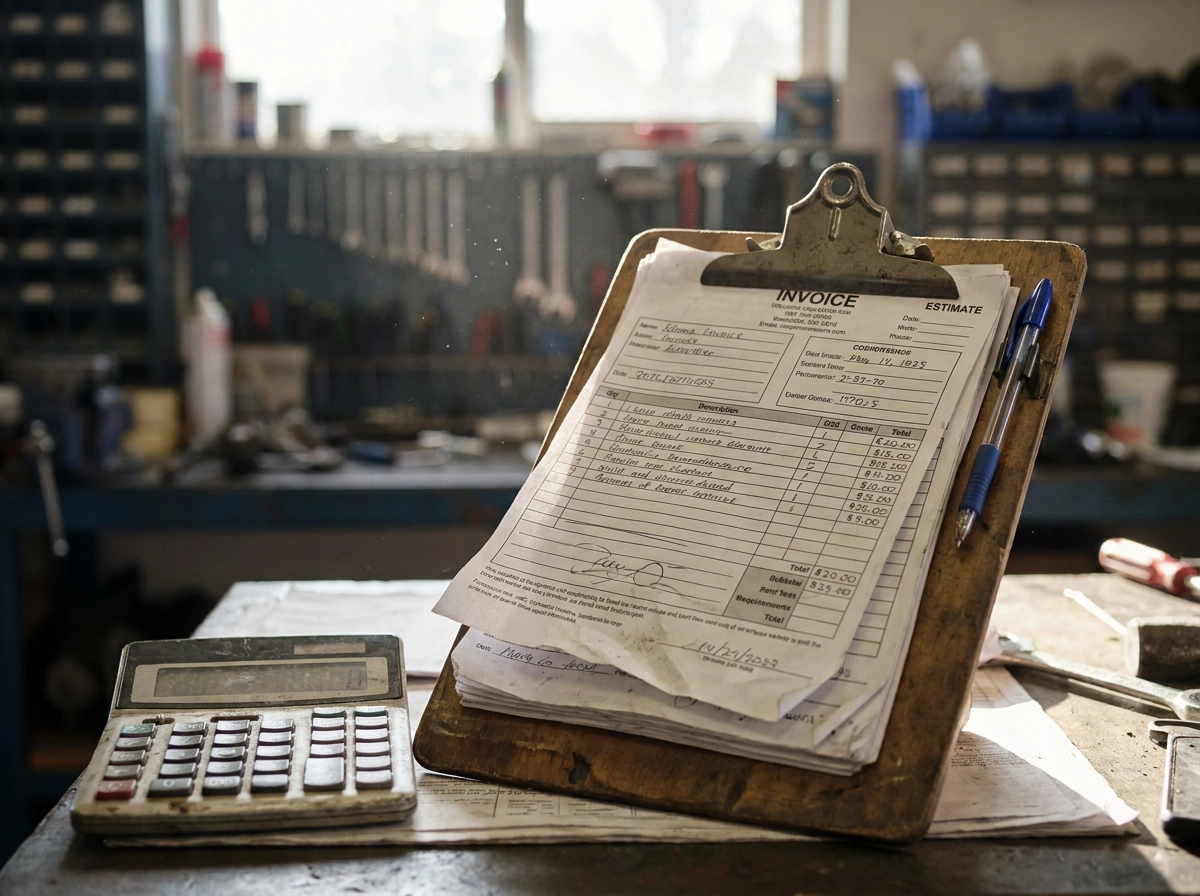
What This Actually Costs a Real Shop
So what does "too slow" actually cost you?
Here's a simple formula. Take your average job value. Multiply it by how many leads you get each week. Then apply the 78% win rate to that number. Now think honestly about how many leads came in this week while you were on a job. How many times were you first?
For a five-person HVAC company getting 10 leads a week, even at a few hundred dollars per job, losing the majority of those to a competitor who just replied faster adds up to a significant chunk of money every single month.
Here's the thing: the bar is low. Per Revenue.io data, the average company takes 42 to 47 hours to respond to an inbound lead. And 58% of companies never respond at all. You don't have to be exceptional to win. You just have to show up.
Paid leads make this even more painful. Google Local Services Ads, Yelp, and Thumbtack all charge per lead. If you call back 45 minutes later and the homeowner already booked someone else, you paid for that lead and got nothing. Slow response turns marketing spend into a direct donation to your competition.
The deeper problem is visibility. Most owners have no idea how many leads came in, when they arrived, or how long it took to respond. Without a lead management system that tracks every inquiry and response, the revenue leaking out the door is invisible. You just notice the slow month and wonder why.
Why This Isn't a You Problem
Here's the thing: most owners blame themselves. They think they're just bad at follow-up. They're not. The problem isn't discipline. It's physics.
Think about what a normal Tuesday looks like. You're under a sink diagnosing a leak, or you're on a roof in July, or you're driving between jobs with your phone sitting on the passenger seat. A new lead comes in. You have no idea. By the time you're back on the ground, hands clean, phone in hand, it's been 25 minutes. That lead is gone.

No amount of effort fixes that. The most organized contractor in the world still can't be on a ladder and answering texts at the same time.
A person can only do one thing at a time. But a lead doesn't wait for a convenient moment. It arrives at 10:04am, and the clock starts immediately. The contractor who wins that job isn't necessarily better at their trade. They just had something in place that responded while they were busy working.
That's the structural answer: an automated first reply that fires within seconds, no matter what you're doing at that moment. It doesn't replace you. It holds the spot until you can take over.
This is where field service software built for small businesses closes the gap. Not by doing your job, but by making sure no lead sits unanswered while you're doing it.
What a Good Automated First Reply Actually Does
So here's the concern most people have: "Won't an automated reply feel cold and robotic?"
Not if it's done right.
A text that says "Hey, got your message. Someone will be with you in just a few minutes" lands completely differently than silence for nearly an hour. It feels human. It feels fast. And most importantly, it works.
The goal of that first reply isn't to close the job. It's to claim the spot.
Once a homeowner gets a response, they stop texting other contractors. They wait. You've gone from one of three options on their list to the only person they're talking to. That's the whole game right there.
A good automated first reply does three things:
It acknowledges the inquiry so the homeowner knows their message landed
It sets a short, honest expectation ("a few minutes" or "shortly")
It keeps the door open for a real person to step in and close the job
That handoff is the key part. The automation isn't doing the selling. The AI runs the first leg; you take the baton when the job is done.
HandsFreeOS sends that first reply by text, email, or website chat within seconds of a new inquiry. From there, the AI can book the job straight into your calendar, and everything from the follow-ups you keep meaning to do, done without you runs on its own.
In terms of CRM sales automation, this is the door-opener. You walk through it.
Paid Leads Especially Can't Wait
That door-opener matters even more when you're paying for the lead.
With organic leads, a slow reply is just a missed opportunity. With paid platforms, it's a direct loss. You spent money to get that homeowner's attention. If you don't reply fast, your competitor books the job and you still get the bill.
On most pay-per-lead platforms like Google Local Services Ads or Yelp, a homeowner's request typically reaches several businesses at once, and the platform charges all of them regardless of who wins the job. You're already on the hook the moment the lead lands.
So think about it this way. A $30 lead that gets a fast automated reply can turn into a $400 HVAC service call. That same $30 lead with a 45-minute callback is a $30 expense with nothing to show for it, because the homeowner already booked the other guy.
Speed-to-response is the biggest ROI multiplier in any marketing budget for a service business.
A lead management CRM that pulls every incoming lead together, whether it comes through a web form, a phone call, a text, or an email, and fires off an instant reply closes that gap. Every paid lead gets a response before it goes cold. Your ad spend stops leaking out the door.
How HandsFreeOS Handles the First Five Minutes for You
So how do you actually win those first five minutes when you're out on a job?
HandsFreeOS puts every incoming message into one place. Texts, calls, voicemails, emails, and website chats all land in a single inbox. Nothing gets missed because you forgot to check a separate app.
The AI teammate handles the first reply within seconds, across every channel. Someone filled out your contact form at 8pm on a Tuesday? They get a response before they've even closed their laptop. You review what we provide and you'll see this is baked into how the whole system works, not bolted on as an afterthought.
From there, new leads can book straight into your calendar. The AI manages the back-and-forth of finding a time, confirms the appointment, then steps back and hands the conversation to you when a real decision needs a real person.
When you climb back into the truck, the Action Center shows you exactly what needs attention. New leads, open quotes, unpaid invoices, all surfaced at the top so you're not digging through a cluttered screen to figure out what matters most.
That's the full loop. Lead comes in, reply goes out in seconds, job gets booked, follow-ups chase outstanding quotes and invoices on their own. You focus on the work in front of you. The system handles the work behind you.
The Fix Is Simple. The Cost of Waiting Is Not.
Here is the bottom line.
Homeowners contact multiple contractors at the same time. The first to reply wins the job most of the time. And the five-minute window that decides the winner is essentially impossible to hit when you're on a job site.
That is a structural problem, not a discipline one.
An automated first reply is the door-opener, a quick text holds the lead warm until you can take over.
Here is a simple check worth doing right now. Think back over this week. How many leads came in while you were working? How many did you reply to within five minutes? The difference between those two numbers is the opportunity sitting on the table.
Even one missed job a week adds up fast over a year. You do not need a spreadsheet to see that the gap is worth closing.
HandsFreeOS handles that first reply for you automatically, across text, email, and web chat, so no lead sits cold while you finish the job you are on.
See how it works and start free at handsfreeos.com.
Conclusion
Speed is the deciding factor, and the window is shorter than most contractors realize. Every week you wait is another week of leads going cold and jobs going to someone else.
Start free at handsfreeos.com and let the first reply take care of itself, starting today.