You're up a ladder, hands full, and your phone buzzes in your pocket. You can't get to it. No big deal, right? You'll call them back later.
But here's the thing: by the time "later" comes around, that person has already called someone else. And that someone else answered.
That's not a hypothetical. That's happening to small service businesses every single day, quietly draining thousands of dollars in revenue that never shows up on any report. There's no invoice for a job you never knew you lost.
In this post, we're going to break down exactly what a missed call actually costs you, why calling back an hour later is often already too late, and how a simple tool called missed call text back can automatically respond to potential customers the moment they hang up. Before they dial your competitor.
Whether you're a plumber, a roofer, a landscaper, or any other service business owner doing the work yourself, this one is worth a read. The numbers might surprise you.
The Call You Missed While Up a Ladder
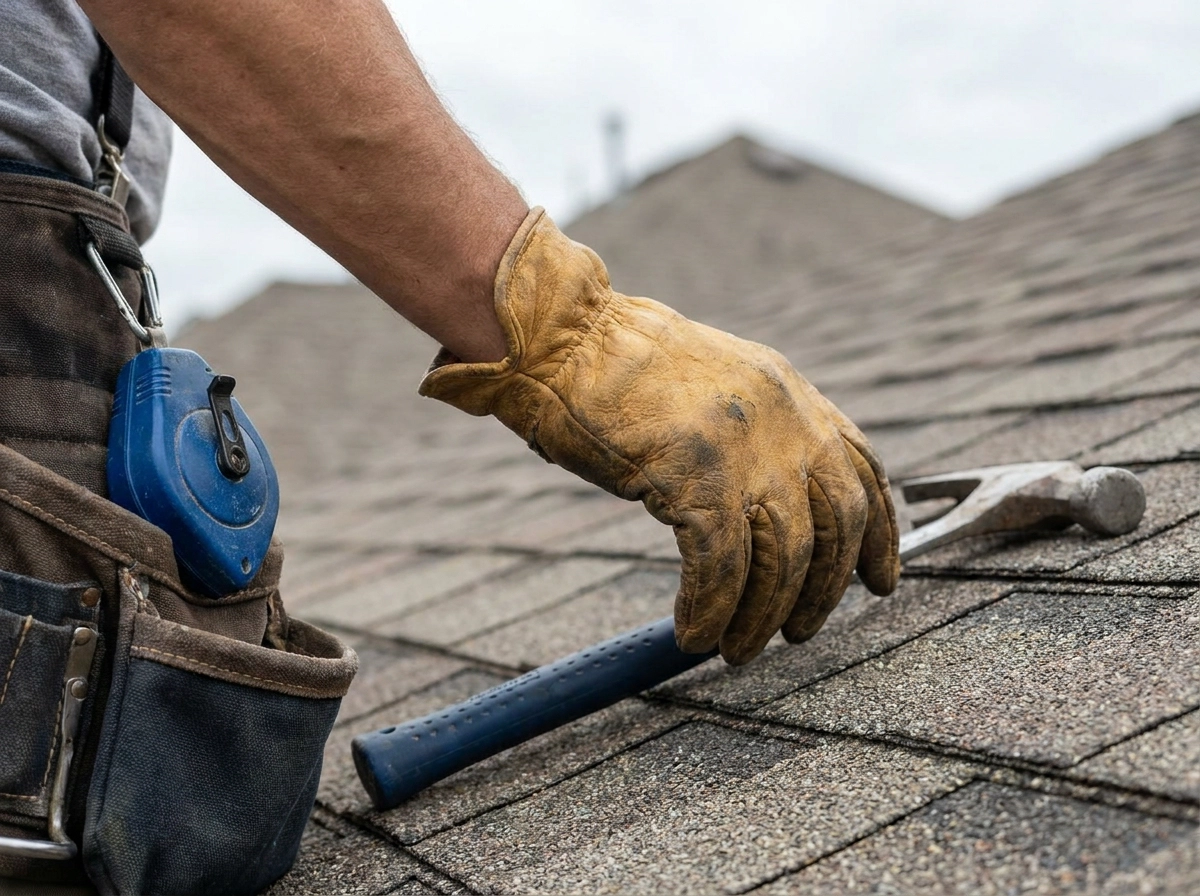
It's 2 PM. You're on a roof, nailing down shingles. Your phone buzzes in your pocket. You can't answer it, so you don't.
That moment happens dozens of times a week across every service trade. Plumbers under a sink. HVAC techs in a crawl space. Cleaning crews mid-appointment. The phone rings, nobody answers, and the owner figures the caller will leave a voicemail or try again later.
Most don't.
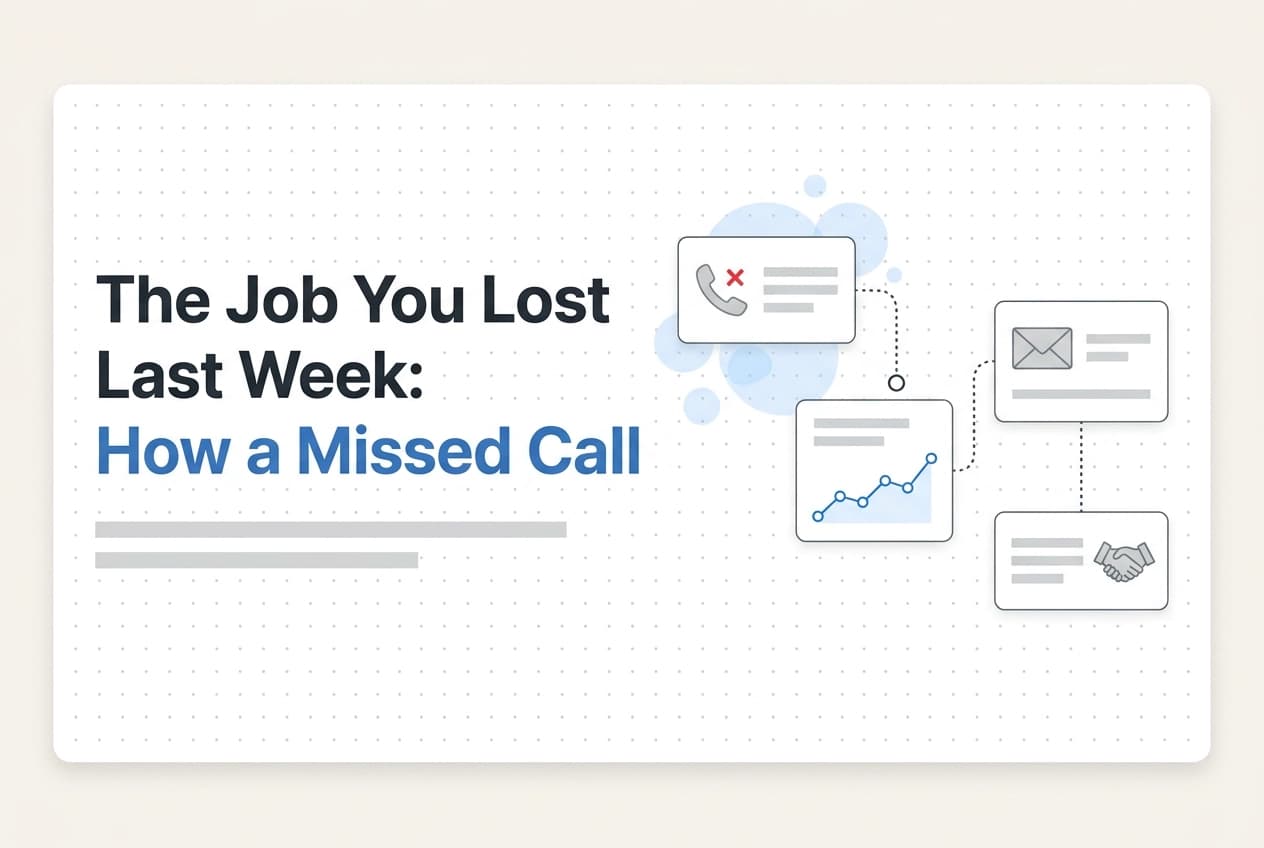
The job you lost last week, you never even knew about. That's because 80% of callers hang up without leaving a voicemail when nobody picks up. They don't wait. They don't try again. They move on.
This is not a discipline problem. You can't take a call with both hands on a wrench. Field work is physically incompatible with answering every call, and that's exactly what makes it a structural problem rather than a personal one. No amount of effort fixes it. Only a system does.
The missed call feels small in the moment. But it rarely is. That one unanswered ring can mean a lost first job, a lost annual service plan, a lost referral to a neighbor, and a lost Google review. Add in the ad spend that drove the call in the first place, and a single missed call quietly costs far more than most owners realize.
That's the problem this piece unpacks.
What Happens in the 5 Minutes After You Miss a Call
Here's what that caller does while you're still on the roof.
They hear your phone ring out. No answer. They wait a beat, then hang up, no voicemail, no message, nothing. Then they open Google and tap the next result. Within five minutes, they've called someone else. If that business picks up, you've lost the job. You'll never even know the call happened.
Those numbers bear out in practice (CallRail, 2025): 82% of consumers say they would call a competitor after a missed call, and 78% have already abandoned a business entirely because no one picked up.
The speed of it is what matters most. Research shows businesses are 100 times more likely to connect with a lead if they respond within five minutes. Wait 30 minutes and that likelihood drops dramatically. The customer is not sitting around hoping you call back. They need a plumber today.
78% of consumers buy from the first business that responds. Not the best-reviewed one. Not the cheapest. The first. Speed wins, every time.
Voicemail does not save you here. By the time you climb down, drive to the next job, and finally listen to your messages, the caller has already booked with someone else. The missed call text you leave at 4 PM is four hours too late.
The follow-ups you keep meaning to do, done without you, that is exactly the gap that needs closing.
What a Missed Call Actually Costs You
So the lead is gone. Now let's talk about what that actually costs.
The numbers vary by trade, but none of them are small. For HVAC and plumbing, each missed call represents $800 to $1,200 in lost revenue. Auto repair runs $200 to $500 per call. Dental and medical, $150 to $400. Those aren't guesses. That's the average job value walking out the door every time the phone rings and nobody answers.
Missing calls consistently can push annual revenue loss well into six figures, and that's only counting the first job.
The real number is bigger. That one missed HVAC call isn't just a $1,000 tune-up. It's the annual maintenance plan. It's the system replacement in three years. It's the neighbor they would have referred. It's the five-star Google review that never gets written. One unanswered call can quietly erase years of future revenue.
Then there's your ad spend. If you paid to run a Google ad and that lead called you and you missed it, the money is gone. The click already happened. The lead is already gone. You paid to bring them to your door and they walked away.
Missed Calls Don't Just Cost Jobs, They Cost Your Reputation
The money side is painful enough. But missed calls do something else too, something quieter and harder to undo: they damage how people talk about your business online.
37% of 1-star reviews mention an unreturned or unanswered call. That means more than one in three unhappy reviewers isn't complaining about bad work. They're complaining that nobody picked up the phone.
Think about what that means in practice. A potential customer finds your business on Google, reads through your reviews, and spots one that says "never called me back." That's it. They move on. Your work quality is irrelevant to them now. They never even give you a chance.
Most owners see reviews as a report card on their craftsmanship. Did the job look good? Was the crew clean? Those things matter, absolutely. But availability is being graded too, and most owners don't realize it.
The Loop That Feeds Itself
As covered in the previous section, the competitor-migration sequence is fast. But if the experience of being ignored stuck with them, some of those callers leave a review on your page, not the competitor's. That review sits there permanently, visible to every future lead who searches your name.
Fewer leads call. You miss more calls. More reviews mention it. The loop tightens.
Fixing your missed call problem isn't only a revenue strategy. It's reputation management. Answering fast doesn't just win the job today; it quietly protects the jobs you'd have lost next month to a single bad review.
Why You Can't Just 'Answer More Calls'
So far, we've covered what a missed call costs in dollars and what it costs in reputation. Here's the part most advice skips: you probably can't fix this by simply picking up the phone more often.
The same reality that makes field work incompatible with answering every call applies around the clock: you can't step away from a job to take a call. That's not a personal failing; it's just how service work operates.
And it's widespread. Across small businesses, 62% of calls already go unanswered or hit voicemail. This is the industry baseline, not an outlier. The smaller the team, the worse the number gets.
The obvious next thought is: hire a receptionist. That does solve it, partly. But a full-time receptionist runs $37,000 to $50,000 a year before benefits. For a two-to-five-person shop, that's a significant labor cost dedicated to one function. And even then, you've only solved the problem during business hours.
That matters because service calls don't stop at 5 PM. Research on restaurant calls finds 51% arrive after 5 PM, a pattern service businesses know well. Emergency plumbing, an AC that quit overnight, a cleaning inquiry sent after the kids are in bed. A daytime receptionist doesn't touch any of that.
The fix has to work without you. It needs to respond the second a call is missed, whether it's 2 PM on a Tuesday or 9 PM on a Friday. Not when you get back to the truck. Not when the office opens Monday.
How Automated Missed Call Text Back Works
So what does the fix actually look like?
When a call comes in and you don't pick up, the system automatically sends a text to that number within seconds. Something simple, like: "Hey, sorry we missed you. How can we help?"
That's it. That's the whole concept.
The customer's phone buzzes before they've even put theirs down. They get a real response, from your business, right away. That keeps the door open before they go back to Google and dial the next number.
The text isn't just a brush-off, either. It can include a booking link so they schedule on the spot. It can ask what they need. It can confirm your hours or service area. The goal is simple: keep the conversation alive rather than let it go cold.
From there, the AI can carry the back-and-forth. It answers basic questions, collects details about the job, and can move the customer from first text to booked appointment without you touching anything. When the conversation needs a person, like a complicated job or a pricing question, it surfaces that thread to you or your office manager with full context already there. You step in ready, not scrambling.
Compare that to voicemail. Voicemail asks the customer to wait, listen to a recording, leave a message, and then hope someone calls back. Most don't bother. If a business texts you through HandsFreeOS, the experience is the opposite: you respond, they reply, a conversation starts.
Passive waiting replaced by an active exchange, in seconds.
What to Look for in Missed Call Text Back Software
Not all missed call text back software works the same way. Here are the five things that actually matter.
Speed. The text has to go out within seconds of the missed call, not minutes. Research shows lead quality drops sharply after just five minutes. If the software takes two minutes to fire, the customer may already be dialing someone else.
Two-way conversation. A single auto-reply buys you time, but it does not book jobs. Look for software where the AI can answer basic questions, send a booking link, and collect job details, all without you touching your phone. That kind of back-and-forth converts far better than a one-liner.
Calendar integration. The best AI missed call text back tools go further than the first reply. They can take a lead from that first text straight to a confirmed appointment, no owner involvement needed. That is the difference between capturing a lead and actually booking the job.
One inbox. Texts, calls, voicemails, emails, they should all land in the same place. If you are checking four separate apps, things fall through the cracks. One inbox means nothing gets missed after the call is already missed.
Built for service businesses. Generic sales tools are designed for people sitting at desks. Your business runs in the field, at odd hours, with no signal sometimes. Look for something built around that reality, and make sure it handles texting, calling and consent correctly from day one.
How HandsFreeOS Closes the Gap
HandsFreeOS checks every box from that list, and it's built specifically for the kind of business where the owner is more likely to be on a roof than at a desk.
As described above, the instant-text-back mechanic fires within seconds of a missed call, keeping the lead in your corner before they dial someone else.
The AI teammate takes it from there. It can answer common questions, send a booking link, and get the job dropped straight into your calendar. You don't touch anything. The customer goes from "I called and no one answered" to "I'm booked for Thursday" without you being involved at all.
Every conversation lands in one inbox: texts, calls, voicemails and emails, all in the same place. No checking three different apps. No missed follow-ups because something slipped into a separate tab.
When a conversation needs a real person, the AI hands it off cleanly. You step in with the full history already there. A complicated job, an unhappy customer, a pricing question: those get to you with context, not just a notification saying "someone texted."
HandsFreeOS is built for service businesses with 2 to 20 people. HVAC, plumbing, roofing, electrical, cleaning, med spas and studios. See exactly what you get, or reach out to us directly if you have questions before you start.
Stop Handing Jobs to Your Competitors
Here is the bottom line.
For home services businesses, the dollar cost of a missed call is real and it compounds fast, as detailed in the earlier breakdown of job values and lifetime revenue.
You cannot answer every call. That is not a character flaw; it is just how field work goes. But you can make sure every missed call gets an immediate text back that keeps the lead in your corner before they dial someone else.
Automated missed call text back is not a system you have to babysit. You set it up once. It runs in the background, responds within seconds, and only pulls you in when a real conversation needs a human. No extra apps to check. No leads falling through the cracks while you finish a job.
The fix is simpler than most owners expect, and the cost of doing nothing compounds quietly until it shows up somewhere painful, like a slow month or a year-end number that does not add up.
If you want to see how it works for your business, start free at HandsFreeOS. No complicated setup. Just fewer jobs handed to your competitors.
Conclusion
Missed calls are not minor inconveniences; they are lost revenue, lost relationships, and lost reputation happening in real time.
Every unanswered call in home services costs you $800 to $1,200 on average, and customers move on in minutes. The good news is that this is a solvable problem, and the solution does not require hiring staff or changing how you work. HandsFreeOS closes the gap automatically, turning a missed call into an immediate text back and a booked job, without adding anything to your day.
Your competitors are already picking up the leads you are leaving behind. That stops the moment you put an automated system in place.
Start free with HandsFreeOS today and turn your next missed call into a booked job.