It's 2 p.m. on the hottest day of the year. Your two trucks are already out on calls, your phone is ringing off the hook, and you just watched three new leads go straight to voicemail. By the time you get a chance to call them back, they've already booked with someone else. Sound familiar?
For small HVAC shops, this scenario isn't just frustrating. It's expensive. The right field service software for small business can change that picture completely, and that's exactly what this post is going to walk you through.
We're going to look at what it actually costs when calls go unanswered, then follow a real two-truck shop through a sweltering peak-season day with AI handling every inbound inquiry in 30 seconds or less. You'll see how the handoff to a real person works, how quotes stop going cold, and how a small shop can genuinely compete with a company ten times its size. No technical jargon, no abstract theory. Just a clear, honest look at what changes when every lead gets an answer right away.
The Real Cost of a Missed Call in HVAC
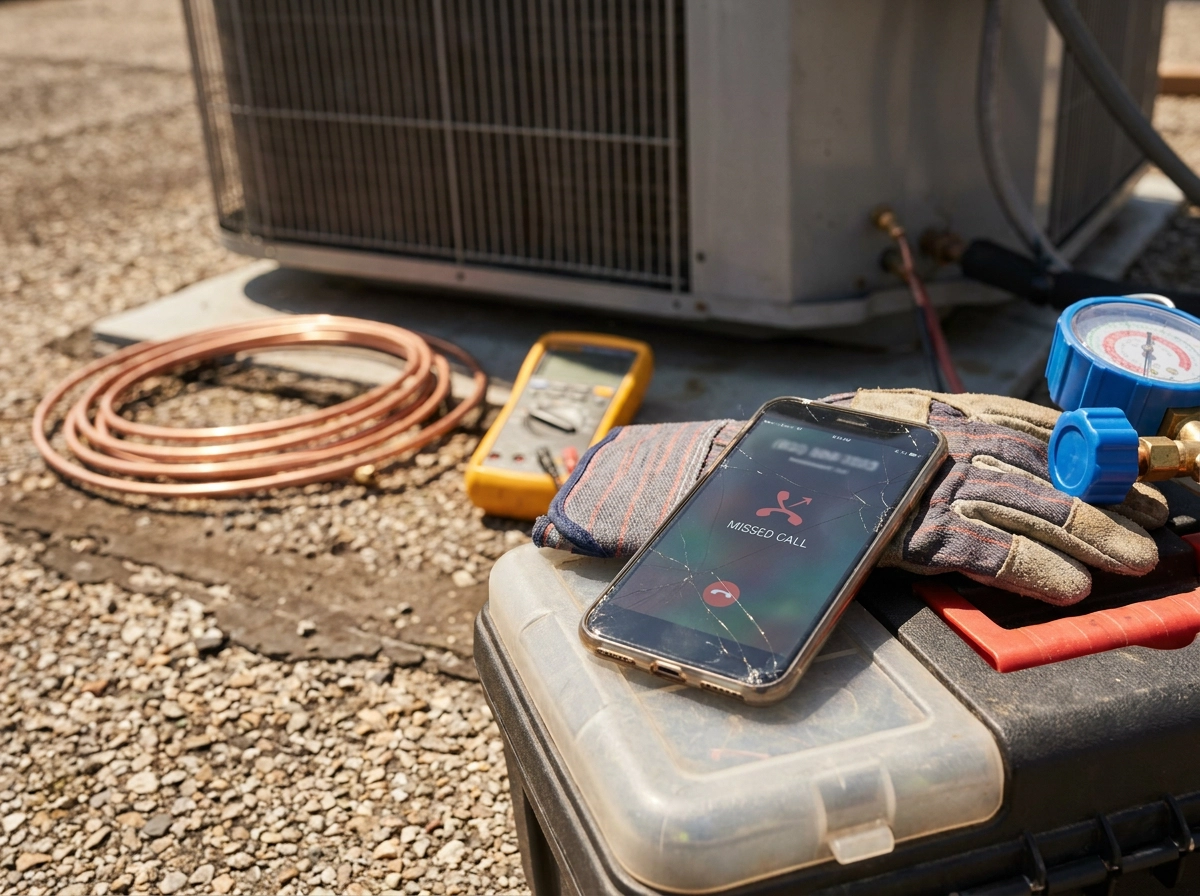
You're on a roof swapping out a condenser at 2 PM when your phone rings. You can't answer. The caller hits voicemail, hangs up, and calls the next HVAC company on their search results. That interaction cost you nothing visible, but it likely cost you a job.
Here's why that matters in dollars. A full system replacement runs around $10,000, with gross margins in the 40 to 60 percent range. That's $4,000 to $6,000 in profit walking out the door because nobody picked up. And that unanswered call quietly becomes a booked job for a competitor before you even climb down the ladder.
The behavior pattern makes it worse. A homeowner with a dead AC in July isn't calling one company and waiting. They're calling three to five at once and booking whoever responds first. They're not comparing reviews or asking about certifications. They just need cold air back.
The timing is brutal. Mid-July heat waves and January cold snaps are when your phone rings the most, and they're exactly the same moments when you and your tech are both heads-down on jobs. You can't pause a refrigerant charge to take a call.
This isn't about technician skill. You can be the best HVAC shop in the county and still lose jobs every week to a mediocre competitor who simply picked up faster.

A Day in the Life: Two Trucks, No Office Staff, Peak Season
Here is what that afternoon actually looks like.
It's 2 PM on a Tuesday in July, both trucks are out, both techs are heads-down. In the span of 20 minutes, three calls come in and two homeowners fill out the web form. Five separate people asking for help.
The tech on the second truck is wrapping up a tune-up across town. His phone is on silent. He's focused on the customer standing in the driveway watching him work.
By the time he checks his phone, two have already booked elsewhere.
The owner calls the other three back. Two go to voicemail. One picks up and says she already found someone. The third books. One job out of five.
The hard part is what he doesn't know. There's no record of the calls he missed, no log of the web forms that came in, no way to count what slipped away. He just knows the day felt busy and the evening felt long.
This is a daily pattern during peak season. And without a field service CRM that captures every inbound contact automatically, every lost job is invisible. You can't fix a problem you can't see.
What a 30-Second AI Response Actually Does
So what actually happens when that call goes unanswered?
The moment a call is missed or a web chat comes in, an automated text fires back within seconds. Not a generic "thanks for contacting us" message. A real question: What's going on with your system, and what's your ZIP code?
That single reply keeps the conversation alive while the owner is still on the roof.
The AI handles all five contacts at once. Missed calls, web chats, email inquiries. No one has to do anything. It asks what it needs: how urgent is the problem, what kind of equipment, and when works best for a visit.
If the job fits an open slot, it books straight into the calendar and sends the homeowner a confirmation. The job is locked in before the owner climbs down the ladder.
Every contact is logged automatically, no sticky notes, no gaps.
And when a conversation gets complicated, the AI doesn't guess. It lets the customer know a real person will be in touch, then alerts the owner with the full chat already written out. No starting from scratch, no asking the customer to repeat themselves.
This is very different from a chatbot that just sends a canned reply. Action-taking AI qualifies the lead, books the job, and only escalates when a real person is genuinely needed, that distinction is what makes the difference between keeping a customer and losing one.
The jobs don't slip away. They get answered.
Scenario Walk-Through: What Happens on a 105-Degree Day
Now picture that process running on the hottest day of the year.
During a heat wave, call volume at a small HVAC shop can spike 300 to 500 percent in a single day. A shop fielding a normal day's worth of calls might suddenly hear from several times that many homeowners, all within the same few hours, all with AC units that just quit.
Before AI
Without automation, most of those contacts have already booked elsewhere by the time the owner is free.
After AI: Dozens of Conversations at Once
With AI handling inbound contacts, every text, call, and web chat gets a reply within seconds, while the owner finishes the job in front of him. The AI runs all those conversations in parallel. It does not get tired, and it does not put anyone on hold.
Contacts marked as same-day emergencies get flagged automatically. When the owner checks in between jobs, those urgent calls sit at the top of his list. Everything else gets booked into the next available slot, and the homeowner receives a confirmation before the owner even knows they called.
By the end of the day, the field service CRM shows a clean picture: booked jobs, flagged emergencies, and a short list of contacts that need a personal follow-up.
How the AI Hands Off to a Real Person (And Why That Matters)
All of that organized response from the AI is useful only if it knows when to step back.
The AI's job is to answer, qualify, and book. That's it. When something comes up that it's not set up to handle, like a homeowner who's frustrated, a question about an older system the AI doesn't recognize, or a warranty dispute, it does not guess. It tells the customer a real person will follow up, then immediately alerts the owner.
That alert isn't just a ping. It includes the full conversation history. The owner can read exactly what the customer said, what the AI replied, and where things stand. No asking the customer to repeat themselves. No awkward "so what's going on with your unit?" when they already explained it twice.
That matters a lot during an emergency. A homeowner whose AC quit at midnight wants to know a real person is going to call them back. The handoff is written to feel like a natural step, not a dead end. When a conversation escalates, the owner steps in with full context already in hand, no dropped threads, no cold starts.
There's also a practical advantage here for small shops. A larger company with three office staff might still rely on handwritten notes or memory. With a field service CRM handling every contact, your team picks up each conversation with full context already in front of them. That's a better customer experience than most bigger competitors are actually delivering.
Beyond the Phone: Quotes That Don't Go Cold and Invoices That Get Paid
The fast reply gets the lead in the door. But the job isn't fully won until the quote is accepted and the invoice is paid.
Think of a quote sent after a service call as a warm lead, not just a document. It has a short shelf life. If no one follows up within a day or two, that homeowner moves on. They call someone else, forget about it, or just decide to wait. The job slips away quietly, and the owner never knows why.
Most owners mean to follow up. They just run out of day. By the time the truck is parked and the tools are put away, sending a text about a quote feels like one more thing.
That's where automated follow-ups earn their keep. The system notices the quote hasn't been accepted. It sends a polite check-in text without the owner lifting a finger. No sticky note required. No mental reminder to set.
The same thing applies to invoices. A payment sitting unpaid for 10 days doesn't need an awkward phone call. A short, friendly automatic reminder handles it, and most customers appreciate the nudge.
HandsFreeOS keeps estimates, invoices, deposits, and automated follow-ups in one place, connected to the same inbox where new leads come in. Everything talks to everything else. Nothing falls through the cracks.
How a Two-Truck Shop Competes With a 20-Truck Company
The paperwork side gets easier once your follow-ups run on their own. But none of that matters if the phone isn't getting answered in the first place.
The staffing gap, the big shop has office staff, you don't, is exactly what AI closes. Your shop can now reply to every call, text, and web chat in seconds, the same speed as a competitor with a full office staff.
Here's what most small operators don't realize: the homeowner doesn't know how many trucks you run. Research backs this up. About 78% of buyers go with the first company that responds, regardless of how big that company is. Fleet size doesn't come up.
A larger competitor with three office staff but slow internal processes will lose jobs to a two-person shop that replies in 30 seconds every time. Speed wins.
Field service software for small business exists specifically for this: giving a two-person operation the response capacity of a much bigger team, without the payroll that comes with it.
What to Look For in a CRM for Field Service HVAC Work
So now you know what speed does for a small shop. The next question is: what should you actually look for when you're picking the tool?
Start with the phone in your pocket. A field service CRM has to work on a mobile device, full stop. And it needs to keep working when the signal drops, because HVAC work happens in crawl spaces, equipment rooms, and rooftops where bars go to zero.
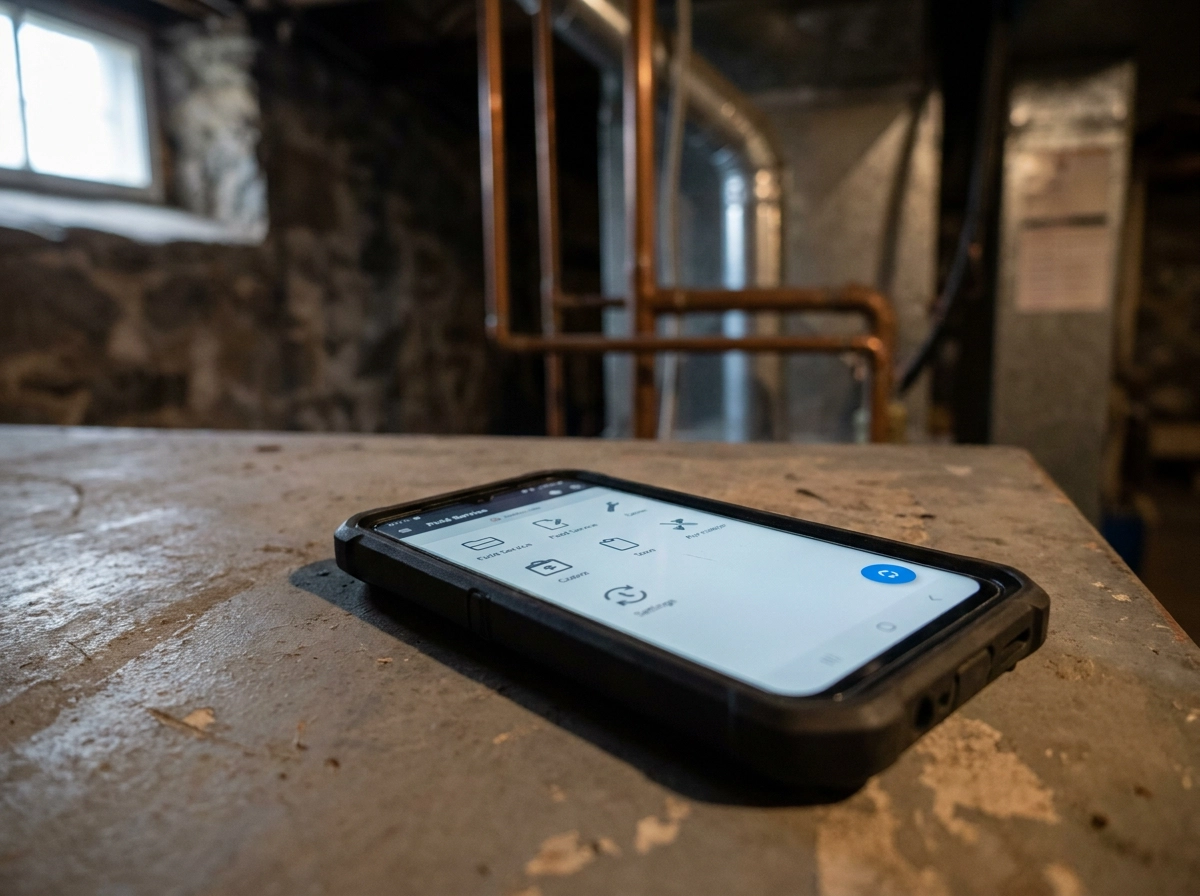
Single inbox. Look for one place where texts, calls, voicemails, emails, and web chats all land together. Jumping between four apps to piece together what a customer said is how things fall through the cracks.
Self-serve booking. The calendar connection matters. A homeowner should be able to pick a time and lock it in without anyone on your team touching it. If booking still requires a phone call to confirm, you've only solved half the problem.
Estimates and invoices in the same place. If your customer record lives in one tool and your invoices live somewhere else, you will spend time reconciling them. Payments, deposits, and estimates should all sit next to the customer's name, not scattered across separate apps.
AI that actually hands off. A generic auto-reply telling a homeowner "we'll get back to you" doesn't help when their AC is out at 9 PM. The AI should answer, collect the details, book if it can, and flag a person when it can't. That's the difference between keeping a customer and losing one.
Most CRMs need you. This one covers for you. HandsFreeOS was built around this exact workflow, with a phone app that runs without signal and one inbox for everything.
The Jobs You Stop Losing Are Already Calling You
The jobs slipping away this summer are not going to shops with better technicians. They are going to shops that texted back first.
The leads are already coming in, the only question is whether they get an answer.
A 30-second text back turns that missed call into a booked job. A voicemail nobody checks turns it into someone else's revenue.
The starting point is simple. Every missed call gets a text back automatically. Every web chat gets an immediate reply. Every booked job lands straight in the calendar without anyone on your team typing a thing. That's the foundation, and it works whether you have one truck or ten.
You do not need to hire anyone or rebuild how your business runs. The software handles the repetitive answering, qualifying, and booking in the background while you finish the job in front of you. You check in when you're ready, and the work is already done.
Review what we provide to see exactly how it fits together for a shop your size. Then start free today, reach out and we'll get you set up.
Conclusion
The leads coming in this season will book with whoever answers first. HandsFreeOS gives your shop that speed, automatic replies, self-serve booking, and follow-ups that run without you, so no contact slips through while you're under a unit. Start free today, reach out and we'll get you set up.