You finish the last job of the day, toss your tools in the truck, and check your phone. Three missed calls. Two texts that went unanswered for four hours. One of those was probably a new customer ready to book. Now they have probably already called someone else.
This is one of the most common pain points for small service businesses, and it is exactly the problem that field service crm software is supposed to solve. But here is the thing: not all CRM tools handle it the same way. Some will show you what you missed. Others will actually do something about it while you were busy.
HandsFreeOS falls into that second category. Its AI teammate does not just answer questions or pull up customer records. It replies to leads, books appointments, and routes conversations, and it does all of this without you touching your phone.
In this post, you will learn exactly how that works. We will walk through what the AI does step by step, which channels it covers, and how it decides when to stop and hand things off to a real person.
The Job You Lost Before You Got Home
It's 2:15 PM on a Thursday. You're on a roof, wrapping up an HVAC job. Your phone rings. You can't answer.
By the time you're back on the ground, that caller has already tried two more businesses from Google. One of them picked up. The job is gone.
This happens every day in small service businesses. HVAC, plumbing, roofing, electrical, cleaning. There's no dedicated receptionist. It's you, or it's nobody. When you're on a job, calls go to voicemail, and voicemails go cold.
The hard part is that you didn't lose that job because of bad service. You would've done great work. You lost it because of timing. Leads don't wait around. They call a few names, and they go with whoever responds first.
Logging that missed call in a CRM later doesn't fix anything. The lead is already booked somewhere else. Documentation isn't the same as a response. If you're curious why most CRMs miss the point with AI by building chatbots instead of action-taking systems, that piece explains it well.
That gap, the window between a lead reaching out and someone on your team being free to respond, is exactly what HandsFreeOS was built to close.
There Are Two Very Different Kinds of AI in CRM Tools
So the issue isn't just that you missed the call. It's what happened after.
Most AI built into CRM and lead management CRM tools today is conversational. It can answer a question, pull up a customer's history, or summarize a note. That's genuinely useful. But it puts the work back on you. The AI tells you what happened. You still have to do something about it.
Think of it like a voicemail transcription. Nice to have. Doesn't win the job.
Action-taking AI works differently. It doesn't surface the lead and wait. It responds to the lead, asks qualifying questions, checks the calendar, and books the appointment. The pipeline updates. The customer gets a confirmation. You find out in the morning that a job came in while you were at dinner.
That difference matters a lot in field service CRM software. HVAC techs, roofers, plumbers, and electricians are physically unavailable for big stretches of every workday. Nobody's sitting at a desk watching for new messages. If the AI just logs things and waits, the lead is already gone.
HandsFreeOS's AI teammate falls into the action-taking category. It doesn't report on tasks. It completes them.
What the AI Teammate Actually Does, Step by Step

Here is what that looks like in real life.
It is Thursday at 6:47 PM. You are at dinner. Someone texts your business number: "Hey, I need an HVAC tune-up."
The AI responds in seconds. It introduces itself as your business's assistant and asks a quick qualifying question: what type of system do you have, roughly where are you located, and what day works best? The customer answers. The conversation moves forward without you touching anything.
If that same person had clicked the chat widget on your website instead, the same thing happens. Same questions, same booking ability, different channel.
If they had called and hit voicemail, the AI sends them a text automatically: "Hey, we just missed your call. Can I help you book a time?" That one message alone recovers leads that would otherwise just disappear.
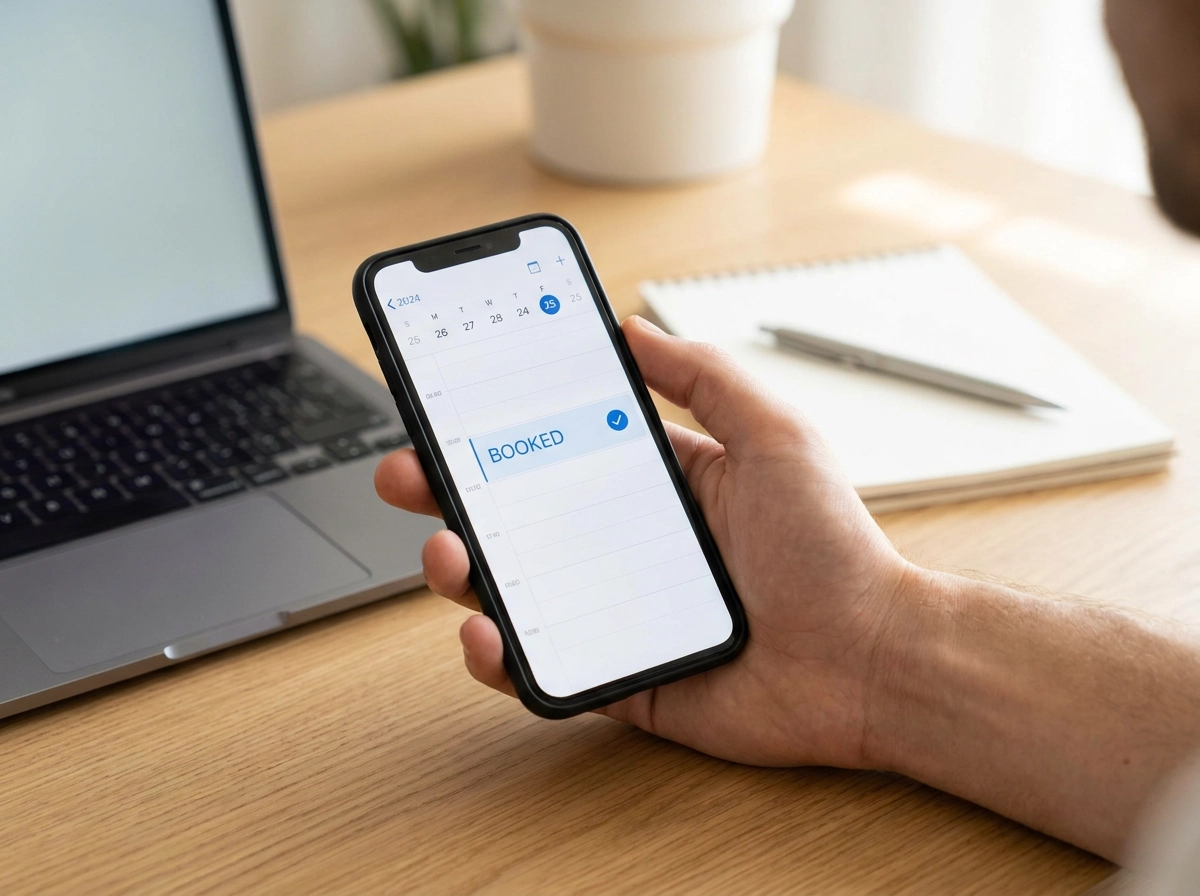
Once the AI has enough detail, it checks your calendar and offers real open slots. No double-booking. No back-and-forth. The customer picks a time, and the job lands directly on your calendar. A confirmation goes to the customer automatically.
You open the app the next morning and there is a booked job waiting. You were at dinner. Nothing fell through.
For a clear picture of what happens with AI inside the platform, including how your customer data is handled, that page lays it out plainly.
Every step above happens without you typing a single word. That is what action-taking AI actually means in practice.
The Channels It Covers (Text, Email, Chat and Missed Calls)

That HVAC example covered one interaction. But leads don't all arrive the same way.
HandsFreeOS gives your business a single phone number that handles both calls and texts. Every message, whether it comes in by text, email, or website chat, lands in one inbox. You're not jumping between apps or missing something because it came through the "wrong" channel.
The AI works across all of them the same way. A lead texting at noon gets a reply in seconds. So does someone filling out your website contact form at midnight. The channel doesn't matter; the speed is the same.
Missed calls are handled automatically too. When a call goes unanswered, the AI sends a text back within seconds: something like "Hey, we just missed your call. Can I help you get something scheduled?" The conversation stays alive instead of going cold. If you've ever lost a job because you were on a roof and couldn't pick up, this is exactly the gap that automated text-back closes.
Most people in service industries try once. No answer, no reply? They call the next name on Google. Meeting them on the channel they already used keeps those opportunities from walking out the door.
When all channels feed into the same inbox, your automated sequences, like chasing a quote that went cold, fire based on what the customer actually said. Not a guess about whether they saw your email.
How It Knows When to Stop and Get a Person
Covering all those channels is the easy part. The harder question is: what happens when a conversation gets complicated?
Most automation just keeps firing replies no matter what. HandsFreeOS works differently. The AI has built-in guardrails that recognize when a human needs to step in, and it stops.
Here are the four main triggers:
1. The customer sounds frustrated or complains. If someone's message signals irritation, a dispute, or a complaint, the AI stops replying immediately. It flags the conversation for a team member to handle. Nobody wants an automated response when they're already upset.
2. The job needs a site visit before anyone can quote it. This comes up constantly in roofing and electrical work. The AI is smart enough to book the assessment appointment, but it will not attempt to quote a price. That call stays with you, where it belongs.
3. The question is outside the AI's scope. Unusual job type, a request spanning multiple locations, anything requiring real judgment: the AI hands it off cleanly rather than guessing at an answer. A wrong answer from a bot is worse than no answer at all.
4. The customer asks to speak with a person. The AI respects that immediately. It stops engaging, notifies your team, and waits. No extra messages, no pushing.
In every case, the handoff is smooth. The customer gets a short message letting them know someone will be in touch. When your team member opens the conversation, the full history is already there. You can see what we provide and how this handoff process is built into the platform. No one starts from scratch.
What the AI Does Not Do
So now you know when the AI steps back. It helps to be just as clear about what it never does in the first place.
It does not replace anyone on your team. It picks up the tasks that fall through the cracks when you're on a roof or under a sink: the first reply, the qualifying questions, the calendar booking. Your people still run the jobs.
It does not make pricing decisions. It will not quote a price, commit to a timeline, or promise something it cannot verify. A customer asking "how much to replace my furnace?" gets a response that collects details and books a visit. The number comes from you, not the AI.
It does not keep pushing when it should stop. That is the whole point of the guardrail logic covered in the previous section. Automation stops at the right moment, every time.
It does not work across a tangle of separate apps. Everything lives inside HandsFreeOS, so no lead detail gets lost moving between platforms. Texts, emails, bookings and follow-ups all sit in one place. You can see exactly what the AI teammate answered on your behalf and where each conversation stands.
Think of it as a first responder. It answers fast, qualifies the lead, and gets the job onto the calendar. Then your team takes it from there.
How the AI Teammate Fits Into the Rest of HandsFreeOS
That "first responder" role only works because the AI isn't operating in its own little bubble.
HandsFreeOS is one connected system. Your customers, sales pipeline, calendar, estimates, and invoices all live in the same place. The AI teammate is built into that same platform, not bolted on as a separate tool. It works with the calendar and inbox you already have.
So when the AI books a job, the appointment shows up directly in the calendar. The lead moves forward in the sales pipeline on its own. Nobody has to log in and type anything.
For field service teams, that matters in a practical way. Your tech can open the phone app on the way to a job site and see their full schedule, even with no cell signal. The booking the AI handled at 9 PM is already there waiting.
The system keeps working after the booking, too. If a quote goes cold, a follow-up goes out automatically. If an invoice hits 10 days past due, a reminder fires without you thinking about it. Maintenance plan reminders run on their own schedule. The AI starts the job; the automation finishes it.
When you do open the app, the Action Center shows you what still needs a human. Things like a tricky quote or an upset customer land at the top, money first. Everything the AI already handled is off the list before you even open it.
Who This Setup Works Best For
All of that works best if your business looks a certain way.
You are probably a good fit if you run a team of 2 to 20 people in HVAC, plumbing, roofing, electrical, cleaning, a med spa, or a similar studio. Your phone rings while your hands are full, not just when you are sitting at a desk.
You are also a good fit if you are the owner or the one office manager doing sales, scheduling, and customer communication on top of everything else. There is no dedicated person watching the inbox. When you are on a job, leads wait, and waiting means losing.
If a competitor has won jobs from you simply because they picked up faster, that is the gap this closes. It is not about being better at the trade. It is about who responds first.
If you have ever sent a quote on a Friday and watched the weekend swallow it whole, automated follow-up is exactly what fixes that. The AI follows up on its own so you are not the one chasing.
What this is not built for: large teams with a full sales staff, dedicated dispatchers, and someone always on the phone. If that is already your setup, you may not feel the pain this solves.
The Short Version
Here's the bottom line.
There's a real difference between AI that tells you a lead came in and AI that actually responds to that lead, books the job, and hands off to a person when it should. One puts the work back on you. The other gets it done while you're still on the roof.
HandsFreeOS's AI teammate does the second thing. It replies by text, email, and website chat. It texts back missed calls automatically. It books jobs straight into your calendar. And it stops the moment a human needs to take over, whether that's a frustrated customer, a job that needs a site visit first, or someone who just wants to talk to a real person.
That last part matters. The guardrail logic is what makes this trustworthy. You're not handing your customer conversations to something that keeps firing replies when it shouldn't. It knows when to step back and get a person involved, with full context already there so nothing gets dropped.
Nobody on your team gets replaced. The AI covers the hours you're unavailable, and your people take it from there.
If that sounds like the gap in your business right now, you can start free at handsfreeos.com.
Conclusion
The gap between a lead coming in and a job getting booked is where small contracting businesses lose real money. HandsFreeOS's AI teammate closes that gap by responding instantly across text, email, chat, and missed calls, booking jobs directly into your calendar, and knowing exactly when to hand things off to a person.
Three things make this worth your attention. It works while you are on the job, not sitting at a desk. It handles the follow-up that most leads never get. And it stops itself the moment a human touch is the right call, passing along full context so nothing falls through.
No staff gets replaced. No customer gets left waiting. The hours you could not cover before are covered now.
If that is the gap in your business, close it today. Start free at handsfreeos.com and see it running in your workflow this week.